


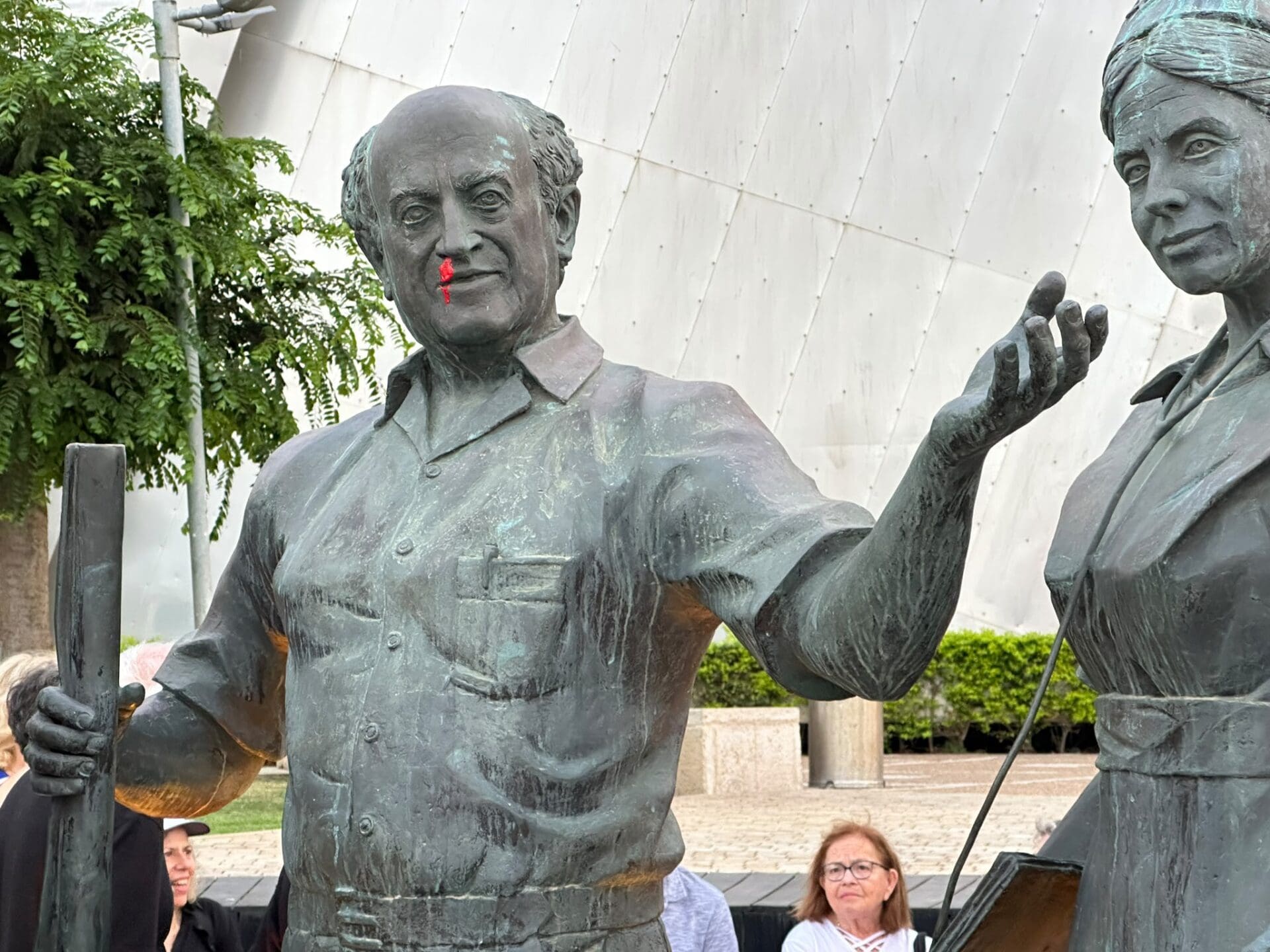
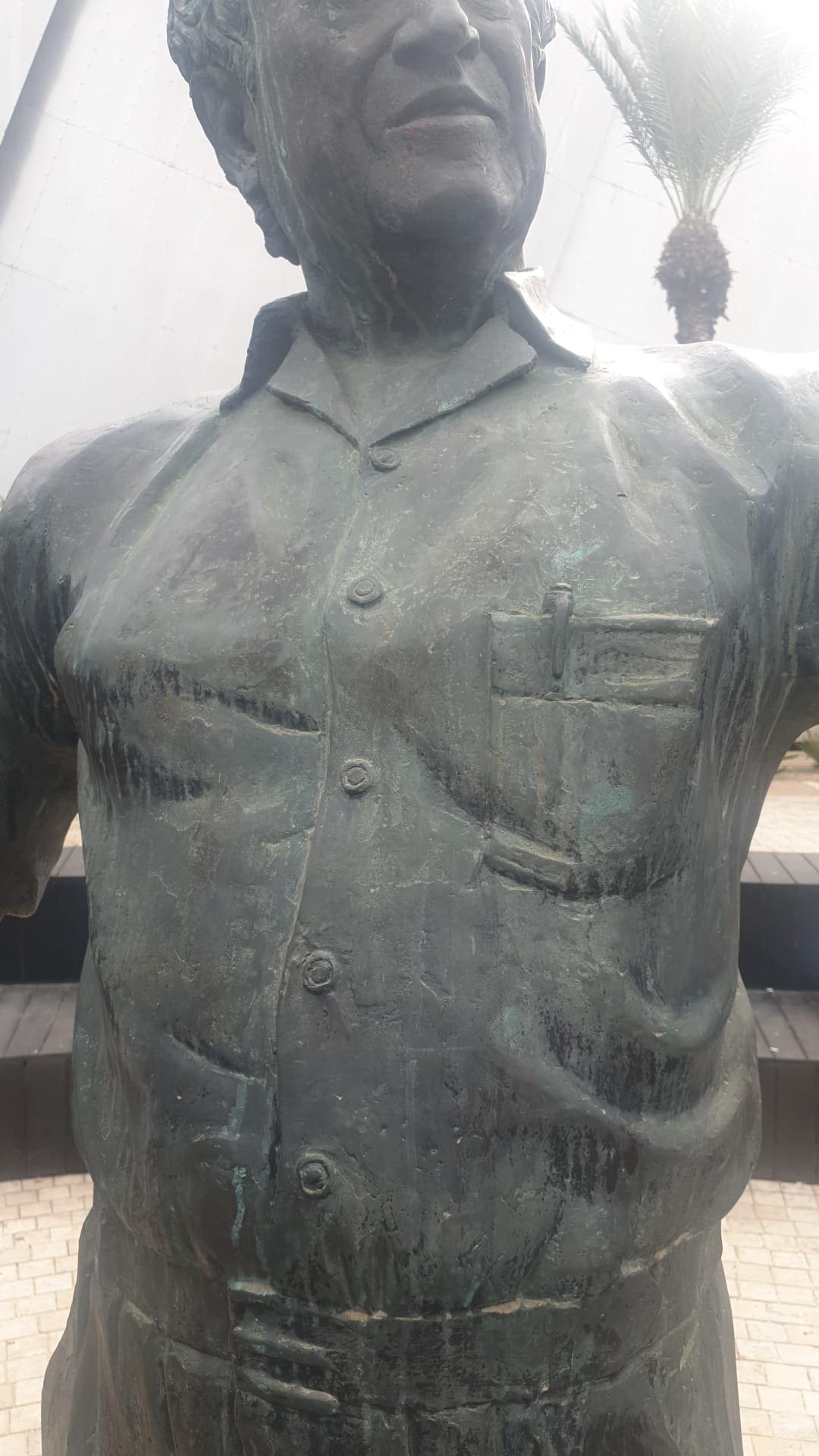
(haipo) The "Zionist Journey" sculpture, located in the Haifa Mall plaza, appears neglected and vandalized. The work, which was inaugurated about 11 years ago and was intended to tell the story of the development of Zionism, raises questions about the condition of the sculptures in the public space. Red paint that looks like blood is dripping from the statues' noses, paint stains and dirt on the bronze figures - who damaged the work, who is responsible for its maintenance, and is enough being done to preserve a work of art of historical and national significance?
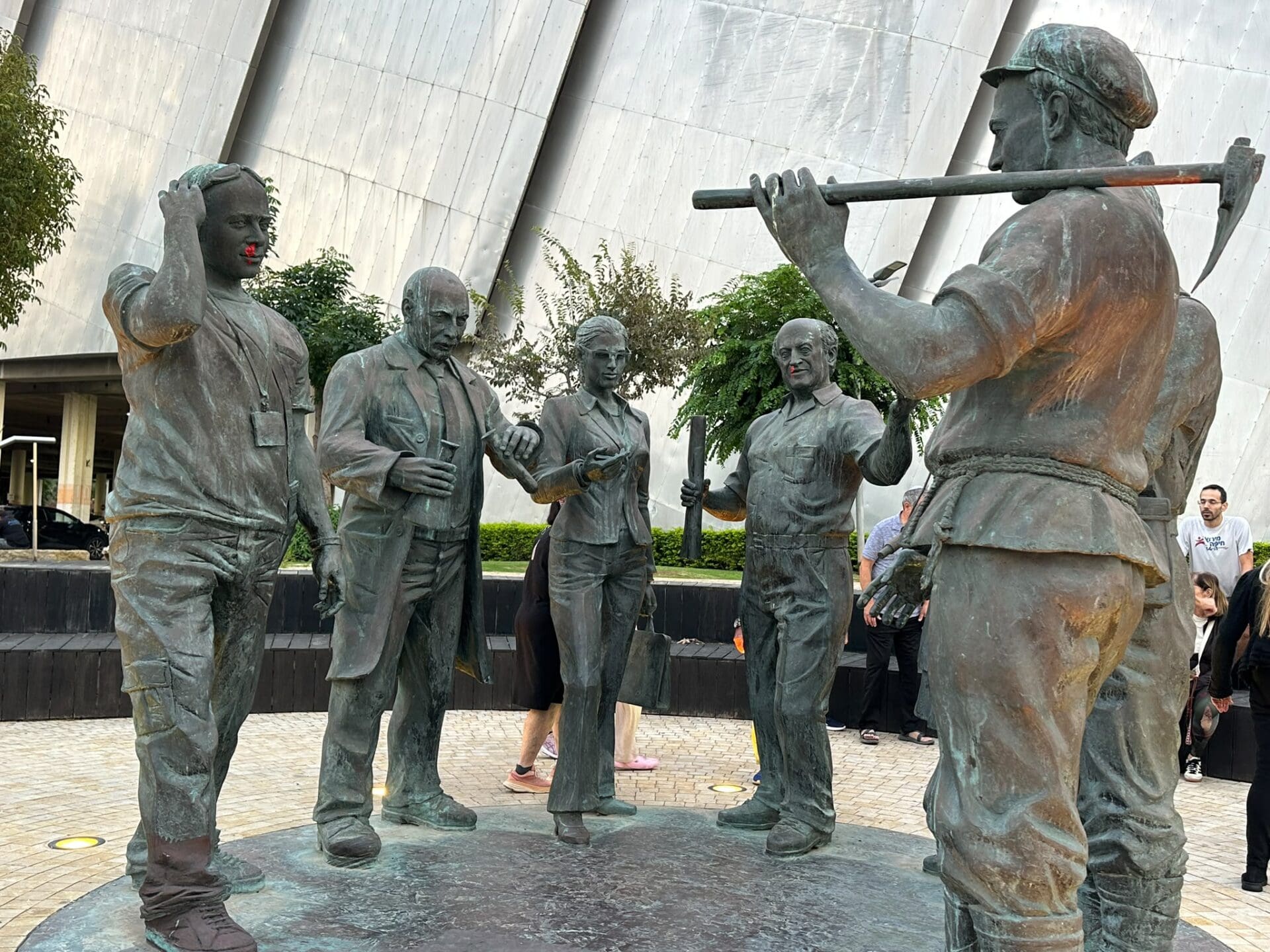
The "Zionist Journey" sculpture, made of bronze and placed in the Haifa Mall plaza, was inspired by the famous work of the French sculptor Auguste Rodin, and is intended to tell the story of the establishment of the state and the development of Israeli society through figures representing professions and key stations in the Zionist journey.
However, a few days ago, red paint stains were discovered on some of the figures, creating the appearance of blood dripping from their faces, and alongside them, additional paint splatters, dirt, and mud were also visible on the surface. Beyond damaging the aesthetic appearance of the work, the condition of the sculpture raises questions about its maintenance, responsibility for its preservation, and the steps required to prevent similar incidents in the future.
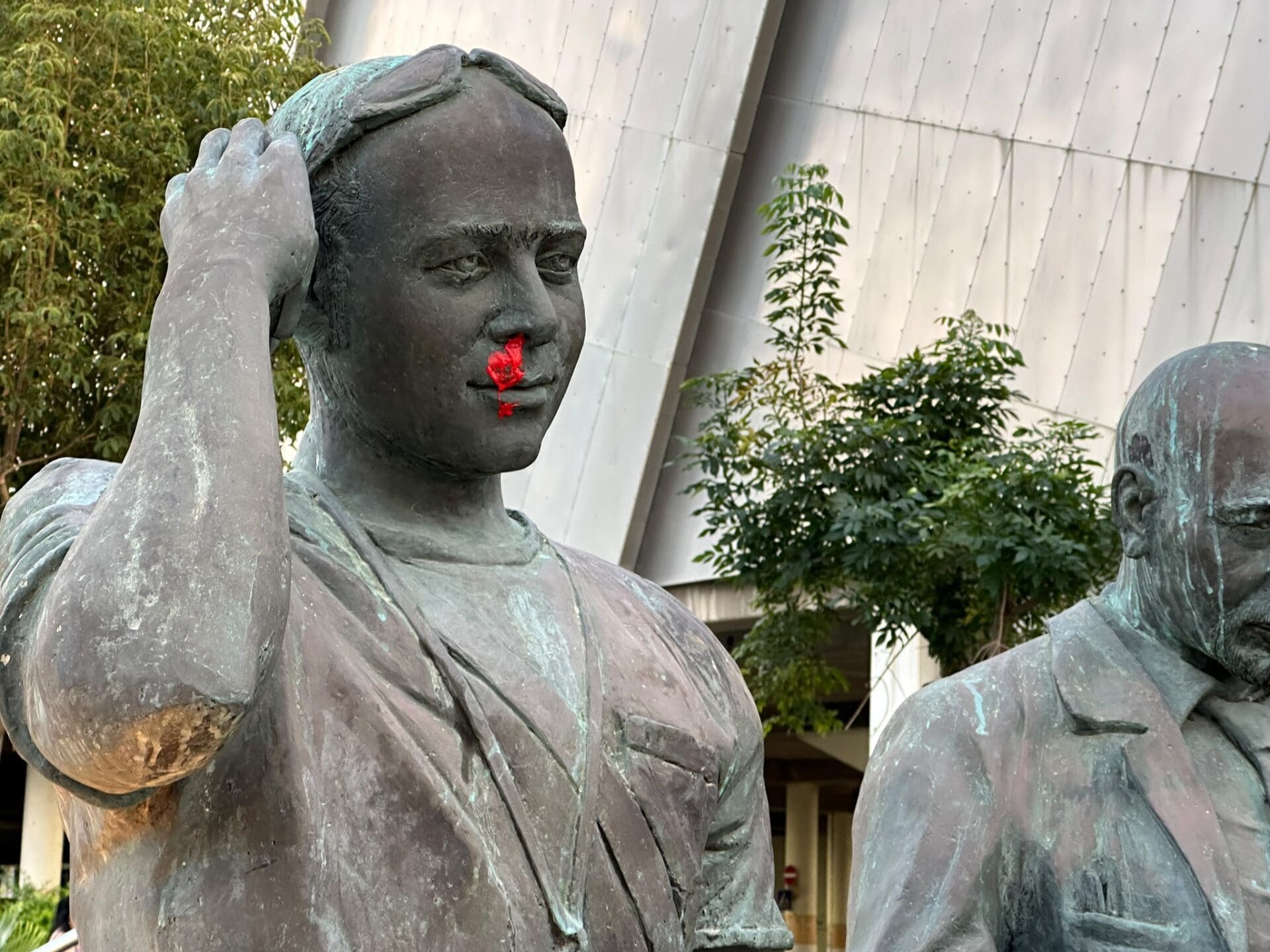
Bronze requires professional care.
Statues placed outdoors are exposed to the elements, dust, bird droppings, environmental pollution, and sometimes vandalism. When it comes to bronze works, proper maintenance is an important condition for preserving the original appearance of the statue and its integrity over time.
Treatment does not end with an occasional wash. It requires periodic inspection of the condition of the metal and coating, cleaning using methods appropriate for the material, removing dirt in a way that does not damage the surface, and, in appropriate cases, applying a dedicated protective layer, in accordance with the guidelines of art conservation professionals.
It is important to emphasize that not every change in the tone of the bronze is necessarily damage. Patina, a layer that forms on the surface of the metal over time, may be part of the original appearance of the sculpture. Therefore, aggressive cleaning or the use of unsuitable materials may actually damage the work. Treatment of a damaged sculpture should be done professionally, while adapting the cleaning method to the material and its condition.
Not only to clean, but also to prevent further damage
Regular maintenance is only part of the solution. Protecting works of art in public spaces also requires thinking about preventing repeated damage.
Possible steps include periodic inspections, quick cleaning after discovering writings or paint stains, improving the lighting around the sculpture, and examining the possibility of installing security cameras, subject to the arrangements in place. If necessary, environmental protection measures that do not harm the visibility of the work and public accessibility to it can also be considered.
When it comes to a work of art intended to commemorate a historical and national story, the responsibility does not end with placing it in a central location. It is also necessary to ensure that it is preserved, cared for, and protected over the years.
A work of art with a message – is the message preserved?
The "Zionist Journey" statue is intended to present the Zionist story through figures representing the people and professions who took part in building the country and the state. Precisely for this reason, its condition with the sight of blood is unsettling. A work that seeks to tell a story of action, construction, and development stands before the public with signs of damage. The question is not only what the statue will look like after cleaning, but also how it will be guaranteed to be preserved over time, who will monitor its condition, and who will act when damage is discovered.
The Zionist journey is intended to tell the story of the state, but now another question arises: Who will take care of preserving the statue that tells this story?
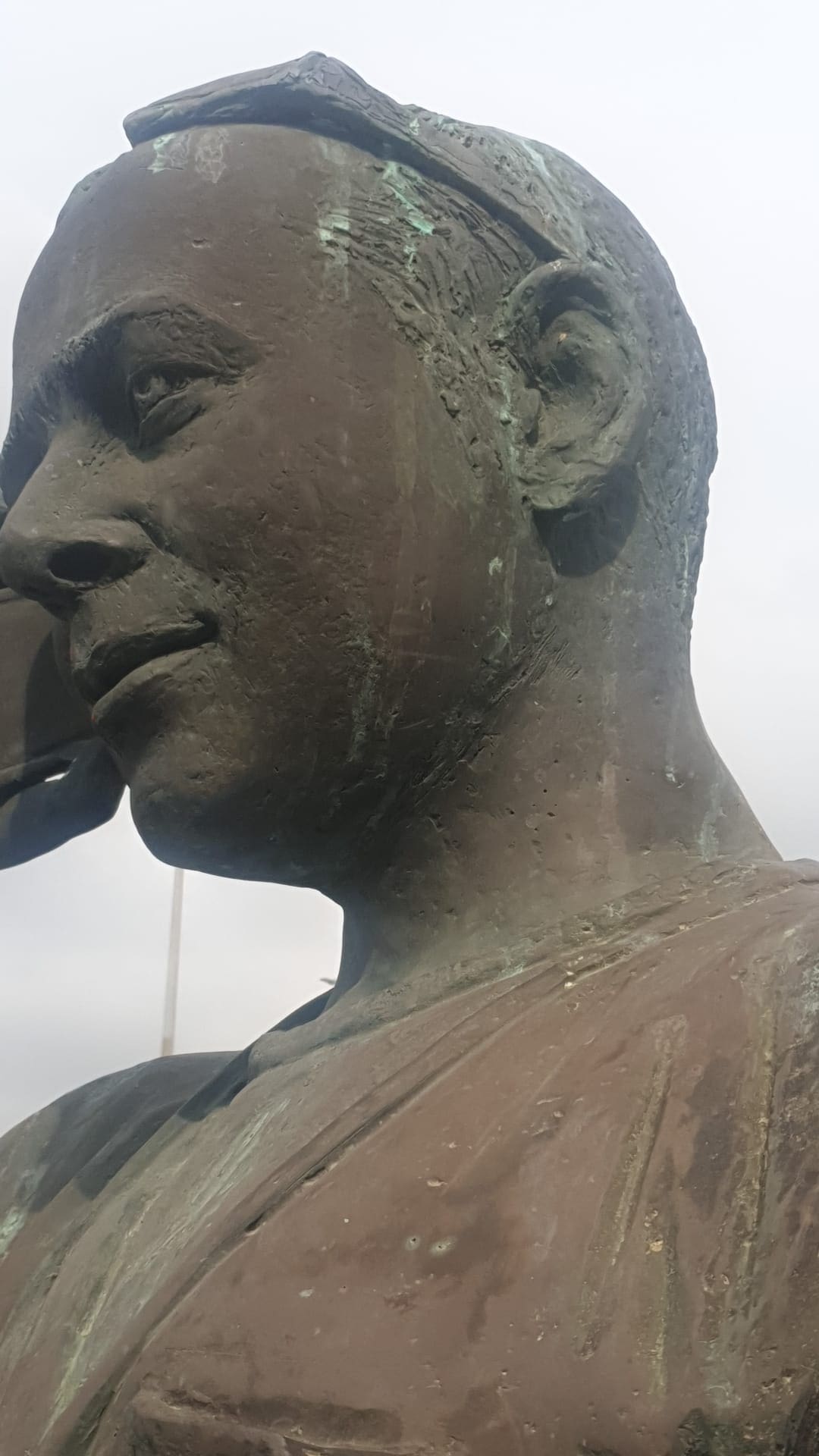
Mall management's response: "The case was handled by the mall staff within 24 hours of the incident. The mall management ensures regular supervision and maintenance of the statue."
Did the article interest you?
Looks like a sculpture from an express. Also in terms of location, materials, and the amateurism of the creators. You can't beautify something that's ugly from the day it was installed.