


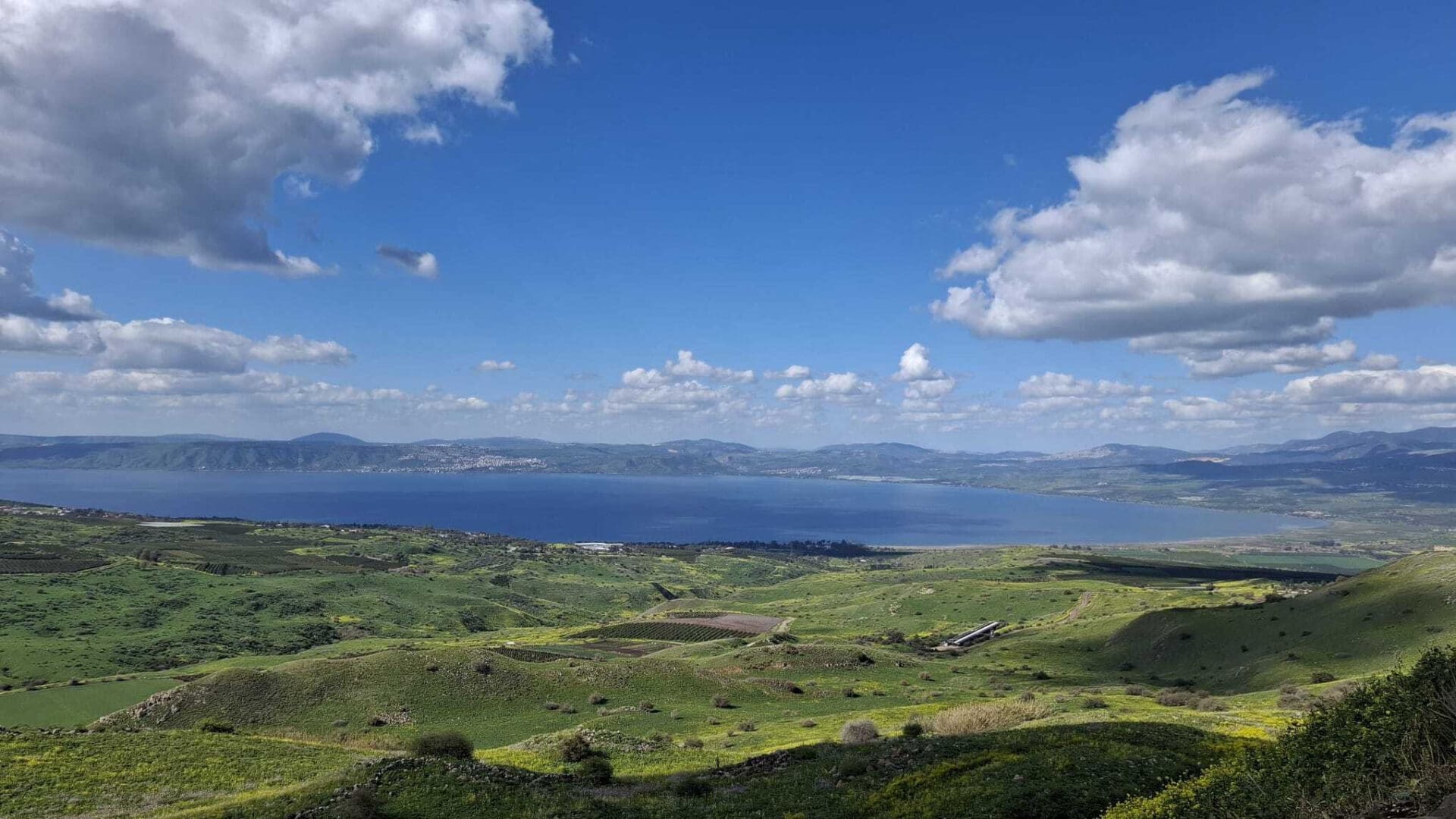
(haipo) – The Water Authority publishes the Hydrological Service report summarizing the 2025/26 rainy season, and the data paints a complex and worrying picture of a changing climatic reality: While the south is experiencing powerful floods and rare flow peaks, the north, especially the Kinneret basin, continues to suffer from the impact of the previous year's extreme drought and a historic low in available water volumes. Although the national rainfall has approached average, natural water sources in the north are still at low levels not measured in a century.
The data fits into a broader trend of climate change, characterized by volatile winters, extreme events, and rainy seasons that no longer behave according to familiar historical patterns.
Precipitation: Normal national average – but extreme regional disparities
According to the report, the national rainfall amount in the 2025/26 season amounted to approx.95% of the multi-year average, but the gaps between the regions are particularly striking:
- The coastal basin and the Yarkon–Taninim: 100% of the average
- The Kinneret Basin: About 90%
- Western Galilee: About 85%
The report emphasizes that a normal national average does not reflect the actual state of water sources, because the deficit created in the drought year 2024/25 continues to affect aquifers and streams.
The data is consistent with the trend of climate change: winters in Israel are becoming less stable, with long dry periods alongside extreme and concentrated rain events.
The Sea of Galilee: Moderate Rise – and Historic Low in Available Water Volume
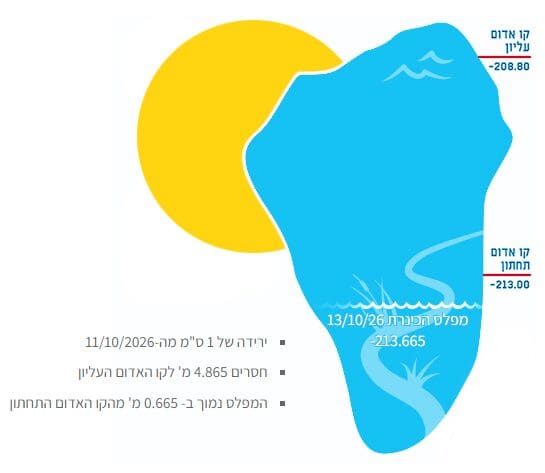
The report notes that the volume of water available in the Kinneret in the 2025/26 season was approximately 142 million cubic meters, and when combined with the previous drought season, only 208 million cubic meters, The lowest figure in 100 years of measurement.
Sea of Galilee level:
- Season opening: 213.08- m
- December low: 213.45- m
- Seasonal increase: 94 cm
- End of the season: 212.51- m
The report emphasizes that the impact of the previous drought caused a drastic decrease in the flow of the springs that feed the Jordan, and therefore even a relatively rainy season was unable to make up for the shortfall.
Springs and streams in the north: only partial recovery
At the end of April, the following were measured:
- Jordan – Cork Bridge: 11.4 cubic meters/year (80% of average)
- Dan Spring: 7.6 cubic meters/year (94% of average)
- Banias Spring: 2.7 cubic meters/year (90% of average)
- Crocodile Springs: 0.64 cubic meters/year (80% of average)
The report notes that historic lows were recorded at the beginning of the season, a direct result of the "hydrological memory" of the drought year.
The South: Unusual floods and flow records not seen in decades
The South experienced an unusually intense season: in the rain event on April 27, 2026, over 50 mm of rain Within about an hour and a half, a return period of about 100 years.
The report states:
- Tze'elim Stream: Peak flow of 570 cubic meters/year, the highest since the beginning of measurements
- an increase of 4 meters At the river level within half an hour
- Significant flooding also in the Lachish, Shikma, and Shur rivers
These events are consistent with the climate change trend: Fewer rainy days – but more extreme events.
Dead Sea: Extremely moderate decline
The Dead Sea level dropped byOnly 18 cm, compared to 63 cm last year, a very moderate decrease since 2019/20.
Climate change: volatile winters and extreme events
Recent winters in Israel show a clear pattern of climate change:
- Decrease in the number of rainy days
- Increase in rainfall intensity
- Flash floods
- Large gaps between regions
The Hydrological Report fits into this trend, illustrating how climate change is affecting water availability, streams, and aquifers. The 2025/26 winter season highlights the dramatic change: While in the past, heavy rain events were part of stable rainy seasons, today extreme events appear alongside prolonged dry periods, and water sources are struggling to recover.
Statement from the Director of the Water Authority – Yehezkel Lipshitz
Lipshitz sums up the season in sharp words: "The recent rainy season clearly illustrates the gap between the national precipitation data and the actual state of water sources… In the south, we saw an exceptional season in the number and intensity of flood events. The data emphasizes the importance of continuous monitoring, forecasting, long-term planning and flexible management of water sources in the State of Israel.”
Summary
The 2025/26 rainy season presents Israel in a new climatic era: a season in which the south is flooded and the north is dry, in which extreme rain events occur alongside historic lows in water sources. Despite an improvement in national precipitation, the Sea of Galilee, the Jordan, and the springs are still dealing with the consequences of the previous drought.
The hydrological report points to the urgent need for smart water management, long-term planning, and preparation for climate change, which has long since become an everyday reality, especially in an era of extreme climate fluctuations.