


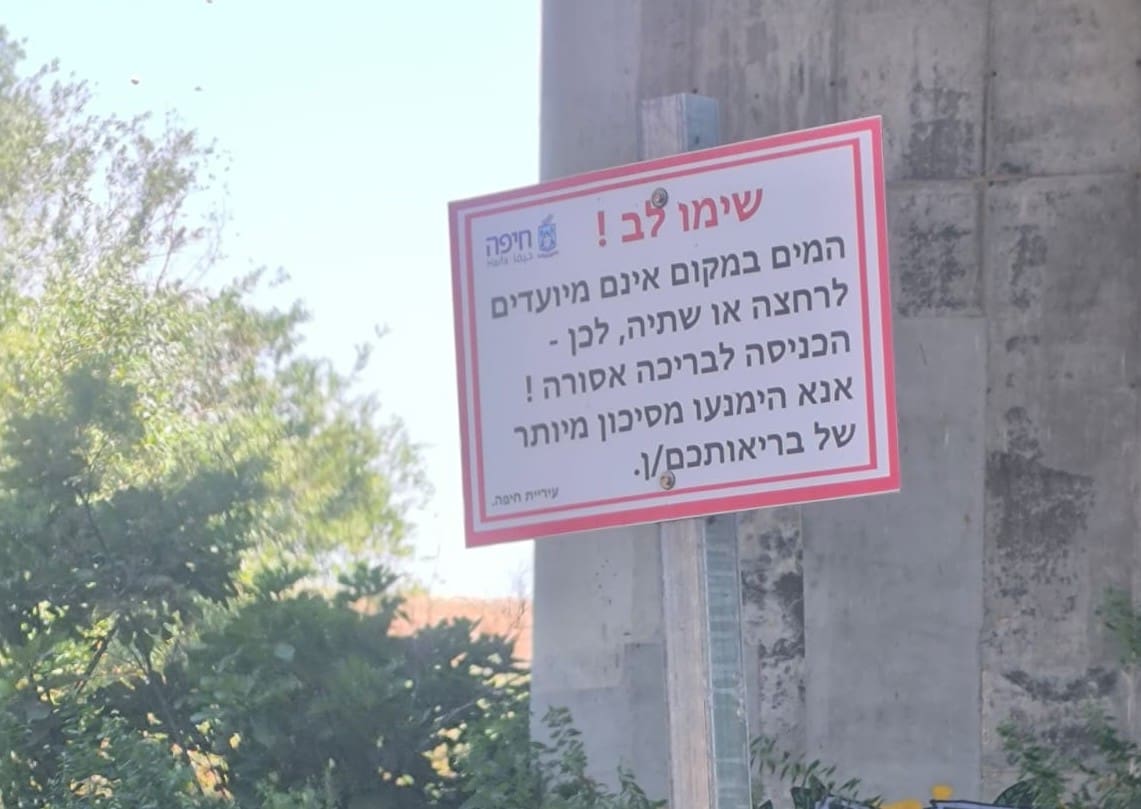
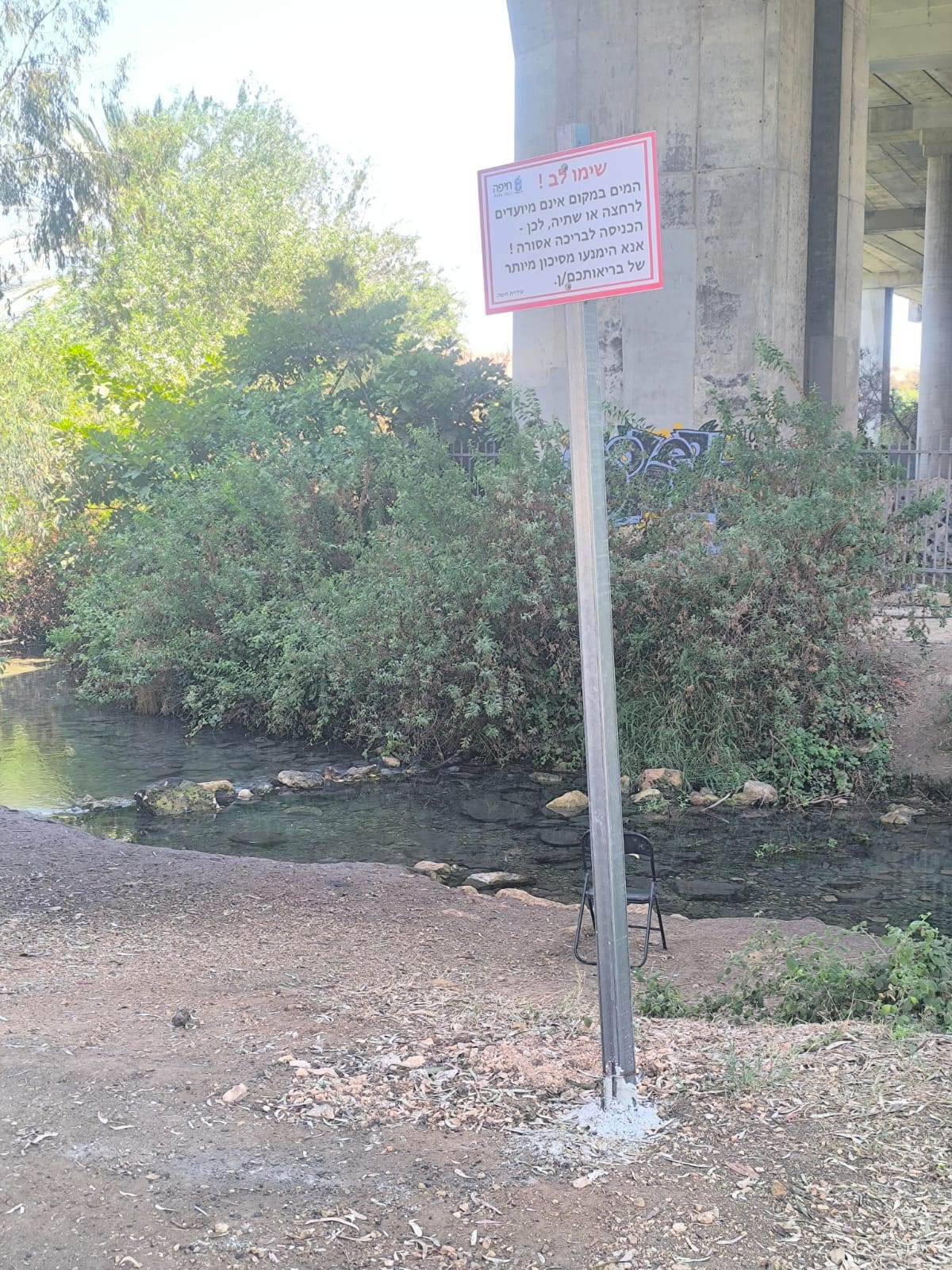
(haipo) – The Haifa Municipality has placed warning signs in waterways throughout the city, including Saadia Stream, Sheach Stream and Ahuza/Oren Stream, and has made it clear that the move is intended to protect public safety. However, the timing raises a question: Was the signage placed following a request submitted about a month ago by City Council members David Etzioni and Zeev Sonenzon, in which they demanded that the municipality at the very least post warnings to the public?
The new signs placed in water bodies throughout Haifa seek to make it clear to the public that this water is not intended for bathing or drinking. However, in parallel with the placement of the signs, a more fundamental question arises: Why only now, and instead of simply warning the public, wouldn't it have been wrong to also monitor and test the water quality?
As you may recall, about a month ago, City Council members David Etzioni and Zeev Sonenzon, from the "Our Home" faction, submitted a query to the Haifa Municipality, in which they raised questions regarding the municipality's policy regarding the city's natural water sources and the manner in which they are presented to the public as nature and recreation sites.
According to the council members, these water sources are located in the heart of the urban area, but are not supervised, sampled, or monitored regularly by the municipality or the Ministry of Health. The concern they raised is that the public, especially children, may come into contact with potentially contaminated water without receiving clear warning about the possible risks.
From infections to diseases – what are the risks?
In the query, council members pointed out a series of possible health risks arising from the presence of animals in water sources and the possibility of contaminants entering the water.
Among other things, leptospirosis was mentioned, an infectious disease that can be transmitted through water or soil contaminated with animal urine, and in severe cases can cause damage to vital organs. In addition, concerns were raised about intestinal bacteria, including fecal coliforms, salmonella and shigella, as well as parasites such as cryptosporidium and giardia, which can cause gastrointestinal symptoms, including diarrhea and vomiting.
According to the query, the risk is not necessarily just biological. Urban runoff, sewage overflows, or infrastructure failures can also lead to the infiltration of pollutants into natural water sources.
The concern is further reinforced by the fact that the water bodies are also used by animals that come to them to drink, including wild boars, jackals, rodents and birds, a factor that may increase the risk of contamination, depending on the characteristics of each water source.
Signs – but no tests?
Now that the municipality has placed warning signs in the water bodies, including the Saadia Stream, the Sheach Stream, and the Ahuza/Oren Stream, another question arises: Is placing a sign a sufficient solution, and is there no room for testing and monitoring of water quality?
On the one hand, clear warning signs are designed to protect the public and prevent contact with potentially contaminated water, but on the other hand, they may create a situation in which the public is prevented from enjoying urban natural resources even when there is not necessarily an actual danger. Instead of being satisfied with a blanket warning, periodic testing and monitoring of water quality can provide an up-to-date picture of their condition, allow for rapid identification of contamination and alert the public when a problem is discovered, but also allow residents to continue enjoying natural sites when the tests indicate that there is no impediment or health hazard.
The obvious question is whether the municipal policy should be limited to a statement that "no entry into the water is permitted," or should it also include a monitoring mechanism that will make it possible to know when, where, and to what extent pollution actually exists.
All the parks are full of signs.
All the streets are full of signs
The Mother Garden already includes more signs than trees.
Stop ruining the country with excess signage.
All these stupid municipalities know how to do is stick up a pole with a sign (and even that is crooked).
100%
messing with nothing