

We all complain about the lack of information on the subject of anti-Semitism. Finally, someone has taken up the gauntlet.
An international conference on contemporary anti-Semitism went under the radar in Haifa
The largest international conference on contemporary anti-Semitism ever held in Israel took place at the University of Haifa on July 7-9. As part of the conference, a global academic center was also established to study the topic of contemporary anti-Semitism.
There are many Holocaust researchers working around the world, but since October 7, a new generation of researchers from a variety of multidisciplinary fields has emerged: lawyers, historians, sociologists, psychologists, criminologists, brain researchers, and more. Even though there are research centers and government advisors on the subject in major cities around the world, anti-Semitism continues to rise. Hence the need for deeper academic research.
This is the third conference in the series. The first two conferences were held in London.
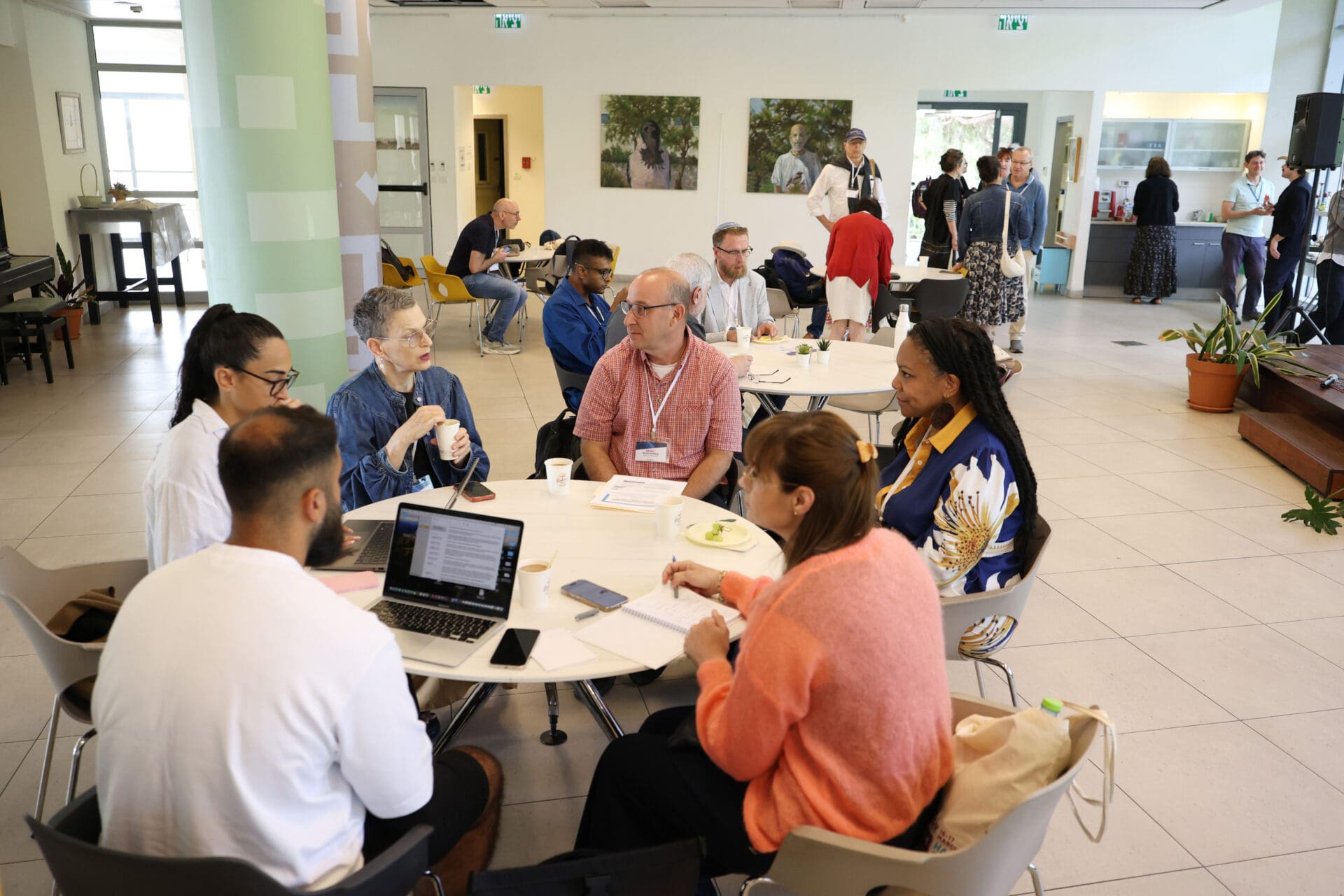
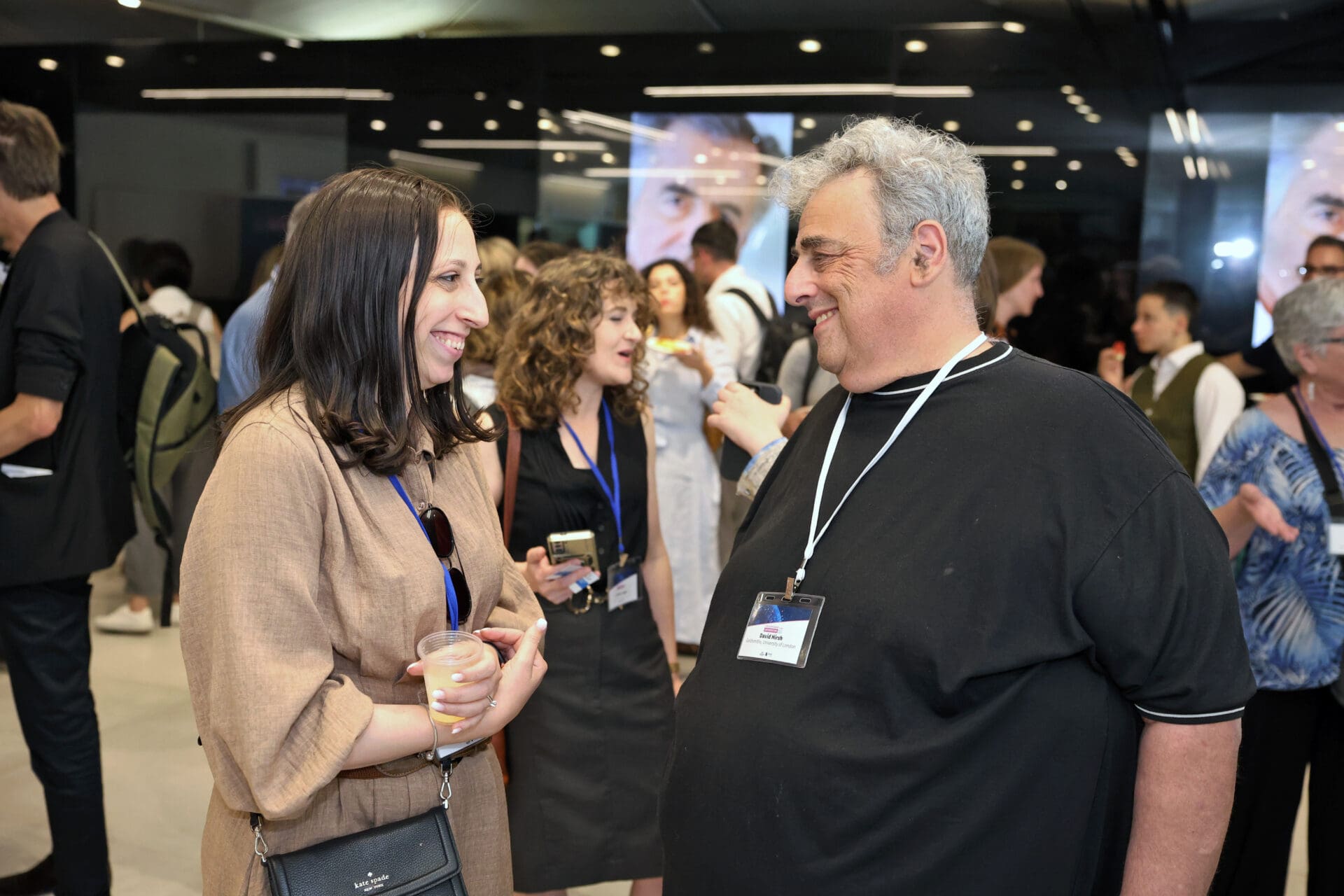
Approximately 550 participants came to Haifa from around the world – from Sri Lanka and India, through European countries including Germany and Britain, to the United States, Canada, Brazil and Mexico.
About 250 lecturers participated in the conference physically and another 70 delivered their lectures via Zoom. Most of the conference sessions were broadcast live.
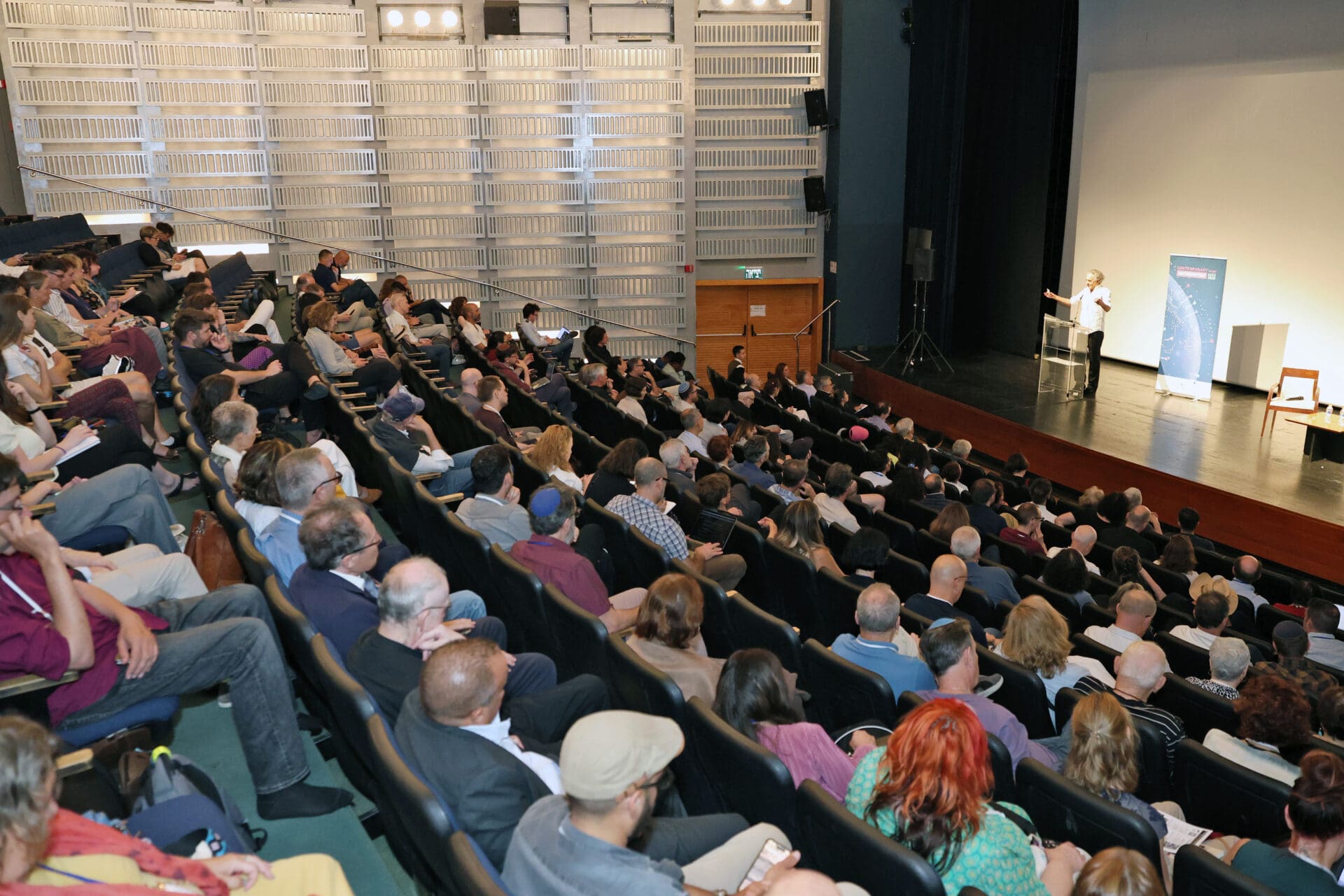
The conference established the Association for the Study of Modern Antisemitism (CASA) – a new international academic association to advance the academic study of contemporary antisemitism, which was officially launched on the gala evening of the "Contemporary Antisemitism – Haifa 2026" conference, which took place at the University of Haifa.
The Association invites academics, researchers, and academic institutions engaged in the study of modern antisemitism to participate in building a new international research community. It was established in partnership with three organizations: the London Centre for the Study of Contemporary Antisemitism (LCSCA), which will serve as the administrative center of the Association; Gratz College in Pennsylvania, which will publish the new scholarly journal; and the Elizabeth and Tony Kuemper Center for the Study of Antisemitism and Racism at the University of Haifa, which will develop the international research center and coordinate the fellowship programs.
The conference was scheduled to be held in March 2026, but following the missile barrage from Iran, it was postponed to July. Despite the change, academics from all over the world changed their plans and came to Israel. It is not obvious to expect such flexibility, but it was important for the organizers and participants to come to Israel.
The conference opened with a gala on the evening of Monday, July 6, at the Tikotin Museum, with a performance by thePoet Maya Tevet Dayan, who shared with participants her personal experiences teaching on campuses in the United States immediately after October 7.
She moved the audience with her personal story and questions about her Jewish identity as a wandering academic. It reminded me that many Jews during the Holocaust only became aware of their Judaism as a result of Nazism and racial laws.
Zionism versus the new wave of anti-Semitism: an expanding global phenomenon
Dr. Amit Assis, Head of the KKL-JNF Institute for the Study of Zionism and Settlement"Many of the early Zionists hoped that Zionism would solve the problem of anti-Semitism once and for all, and now, after about a hundred and twenty years, Zionism has become a derogatory term by which Jews around the world are persecuted. For the JNF as a Zionist body, the fact that Jews around the world are once again suffering from harassment and violence is not only a problem that requires a solution, but also a riddle that we must understand. That is why we were happy to gather and participate in the impressive conference initiated by the Kumper Center at the University of Haifa."
Dr. Ariel Admoni, Speaking at a conference on behalf of Ariel University and the Jerusalem Institute for Strategy and Security, he described the importance of the conference in bringing to light less talked about aspects of antisemitism, such as Islamic antisemitism, antisemitism in the Gulf, and antisemitism in sports.
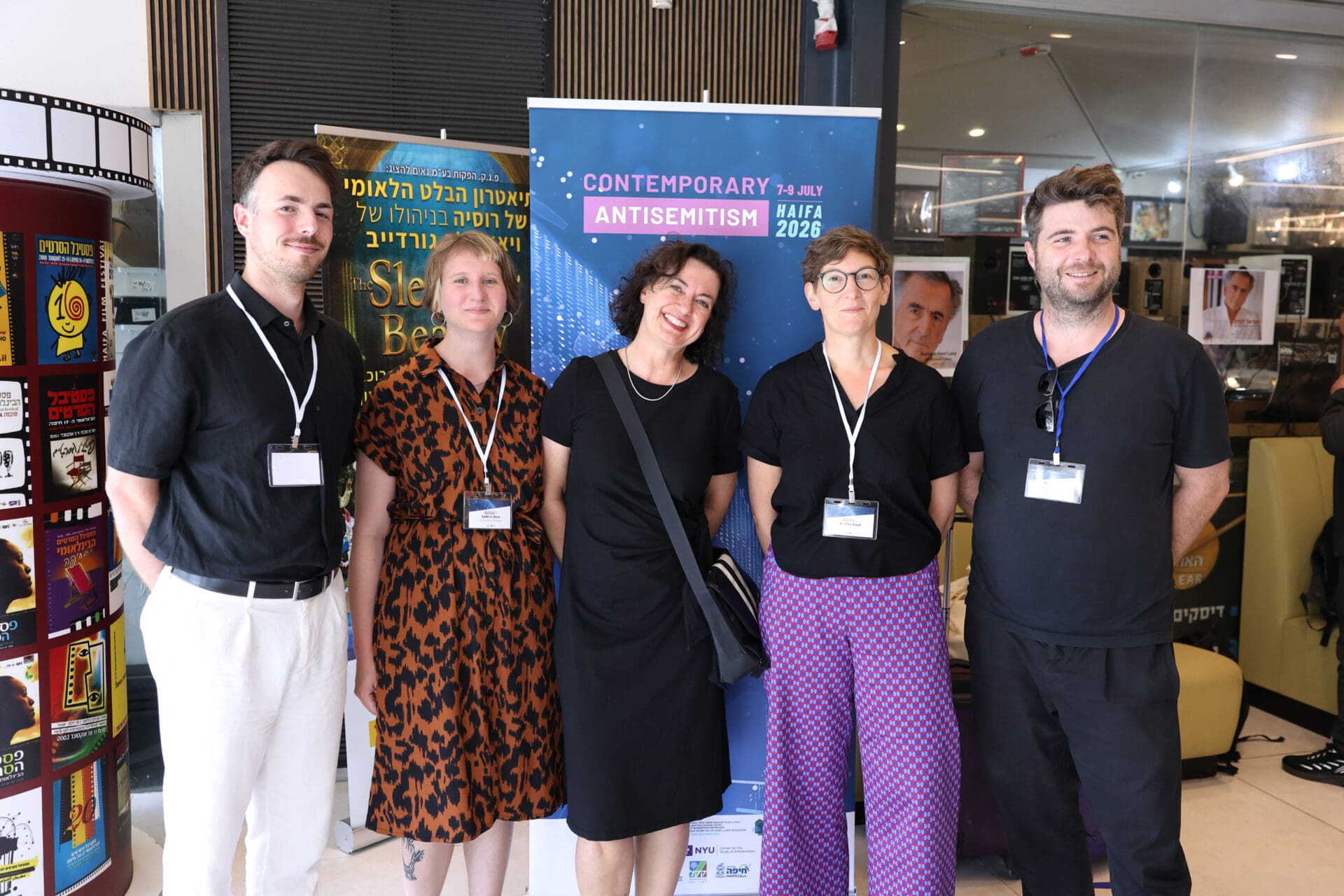
Among the conference participants were also Prof. Karin Stogner, Head of the Chair of Sociology at the University of Passau, andProf. Stefan Grigat, Professor for Antisemitism Research at the Catholic University of Applied Sciences in North Rhine-Westphalia and Director of the Center for the Study of Antisemitism and Racism (CARS) in Aachen and Cologne.
According to Stogner, “It was important for me to clarify the connection between sexism and anti-Semitism, both on a theoretical level and in the context of the brutal violence of October 7.” She added that “the conference also sent a clear message against the BDS movement. The fact that 500 academics came to Israel proves that there is a counter-movement in Europe and the US to the incessant calls for a boycott.”
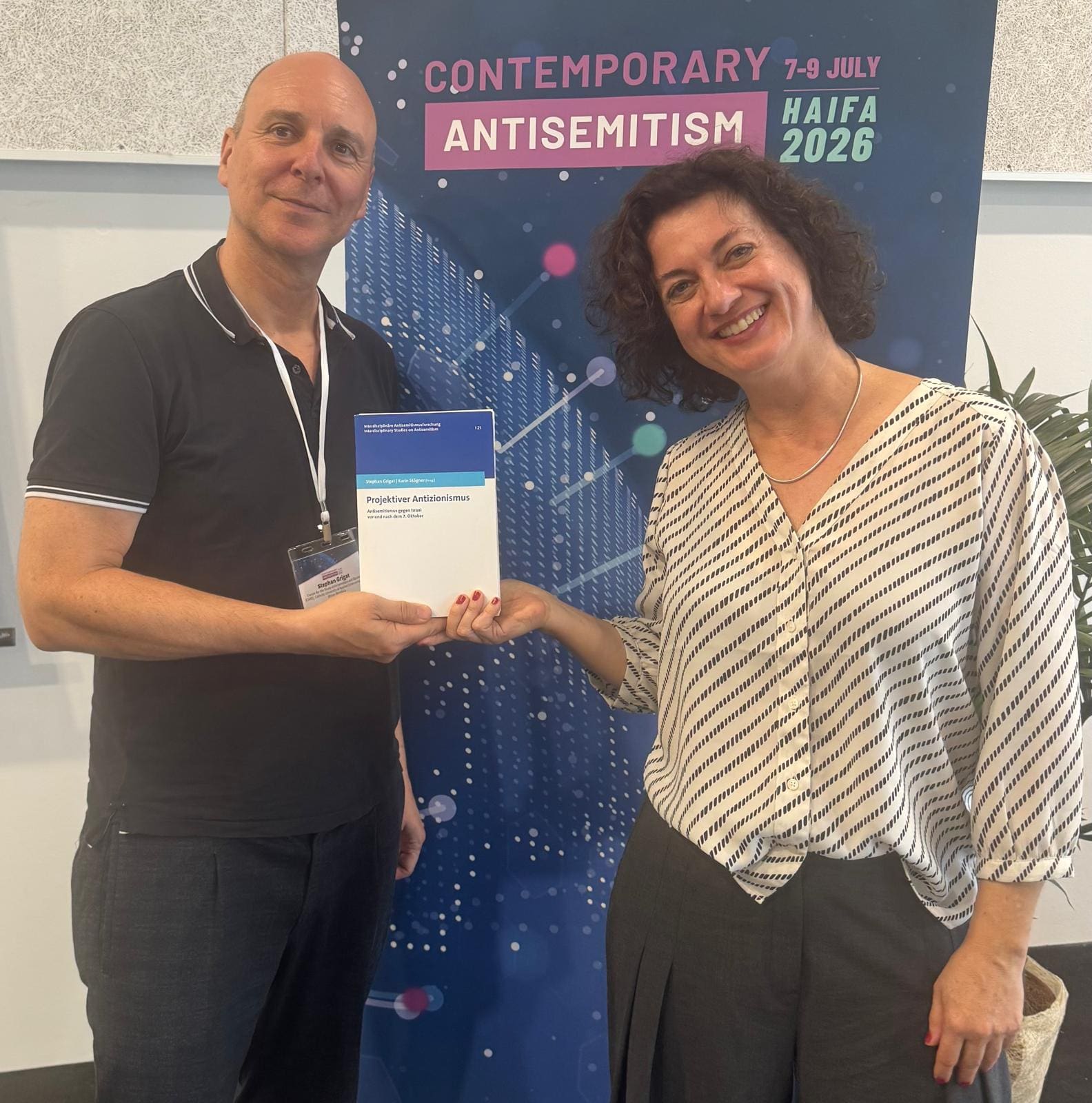
Iranian anti-Semitism in Focus: Remarks by Prof. Stefan Grigat
Prof. Stefan Grigat, A professor of anti-Semitism research at the Catholic University of Applied Sciences in North Rhine-Westphalia and director of the Center for the Study of Anti-Semitism and Racism (CARS) in Aachen and Cologne, he highlighted the gap in academic research regarding the anti-Semitism displayed by the ayatollah regime in Iran. He said, "Even within the framework of academic research on anti-Semitism, the various forms of anti-Semitism demonstrated by the Iranian terrorist regime continue to fail to receive adequate analysis. That is why I was pleased that the anti-Semitism of the ayatollahs was at the center of discussion at the conference in Haifa, just as it was at the two previous conferences held in London."
Grigatt later added that one of the central tasks of contemporary research is the analysis of expressions of projective anti-Zionism: "In this context, it seems to me particularly important to clarify both the Christian and Islamic roots of the current hatred of Israel, as well as to take into account the tradition of National Socialist anti-Zionism and its continuing legacy."
Debra Lipstadt and Prof. Dina Porat: Central voices in the global fight against anti-Semitism
Debra Lipstadt from the United States, who served as the special envoy to combat anti-Semitism during Joe Biden's presidency, spoke at the conference and presented the current global challenges in the political and social arena.
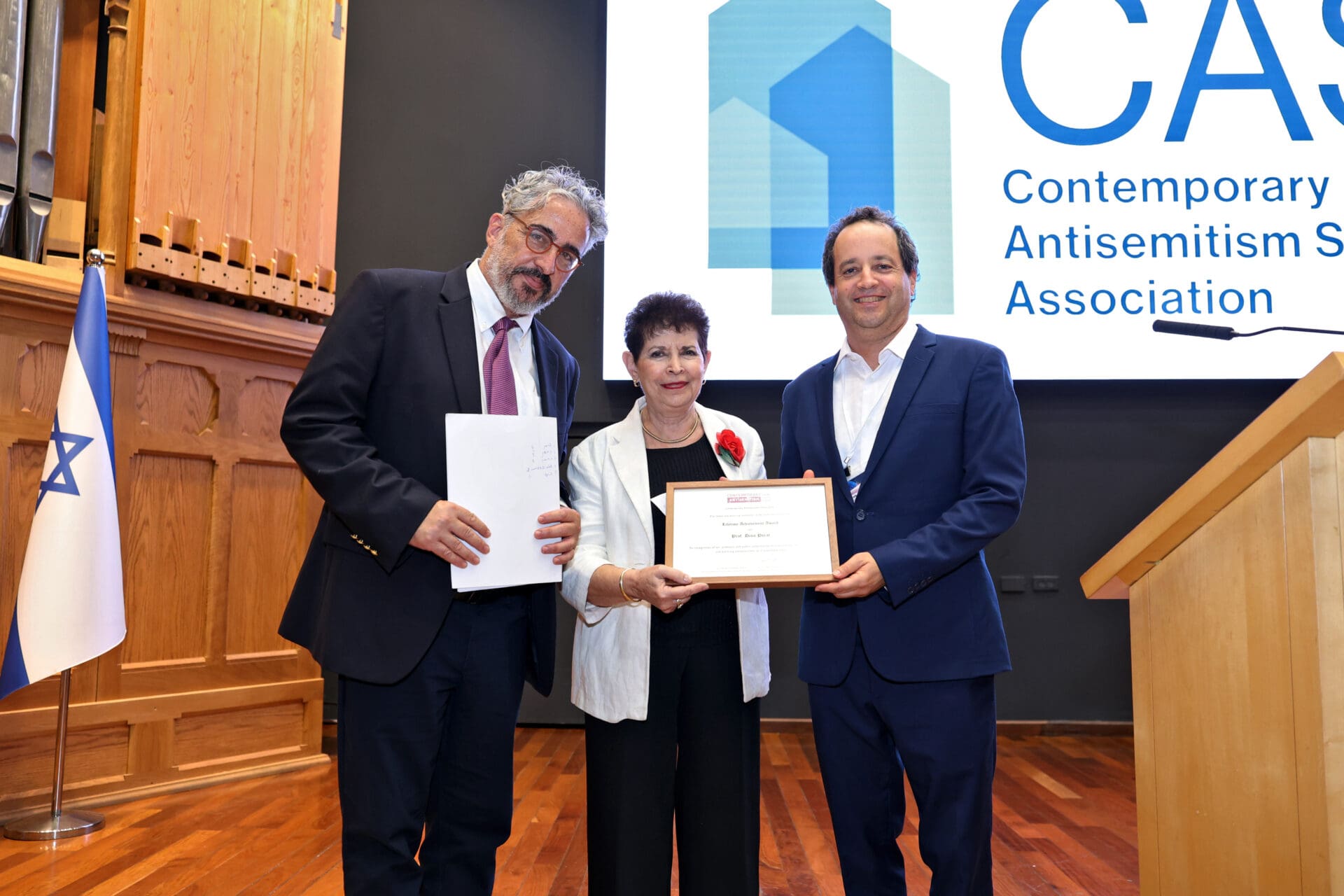
During the conference, a lifetime achievement award was presented toProf. Dina Porat from Tel Aviv University, for her many years of contribution to the study of anti-Semitism. Porat collected evidence on cases of anti-Semitism around the world and was a key partner in formulating the IHRA working definition, which was adopted by many countries and even enshrined in legislation.
IHRA Definition of Antisemitism: An International Framework for Tackling a Changing Phenomenon
The IHRA's non-legally binding working definition defines antisemitism as:"A certain perception of Jews, which can be expressed as hatred towards Jews", and emphasizes that antisemitic expressions may be directed against individuals, institutions, property, or religious sites.
Such expressions can also be directed against the State of Israel, when it is perceived as a Jewish collective. However, criticism of Israel similar to that directed at any other country cannot be perceived as anti-Semitic. Anti-Semitism often accuses Jews of plotting to harm humanity, and is often used to place responsibility on Jews for everything that goes wrong. Anti-Semitism is expressed in speech, writing, visuals, and actions, and makes use of dark stereotypes and negative character traits.
Contemporary examples of antisemitism in public life, the media, schools, workplaces, and religious spaces can include, but are not limited to, the following:
- Calling for help or justifying the killing of Jews, or harming them in the name of an extremist ideology or an extremist religious view.
- Raising malicious references that deny Jews their humanity, dehumanize them, demonize them, or stereotype them as individuals or as being related to the power of Jews as a group, such as, but not limited to, the myth of a global Jewish conspiracy to control the media, the economy, government, or other institutions of society.
- Accusing the Jews as a people of being responsible for negative acts, real or imagined, committed by a particular Jewish individual or group, or even for acts committed by non-Jews.
- Denial of the existence, purpose, mechanism (e.g., gas chambers), and tendencies of the extermination of the Jewish people by Nazi Germany, its supporters, and its allies during World War II (the Holocaust).
- Accusing the Jews as a people, or Israel as a state, of inventing the Holocaust or exaggerating its scale.
- Accusing Jewish citizens, who do not live in Israel, of being more loyal to the State of Israel or of prioritizing the interests of Jews around the world over the interests of the country in which they live.
- Denial of the Jewish people's right to self-determination, including through the claim that the existence of the State of Israel is a racist initiative.
- Applying double standards towards Israel by demanding that it behave in a manner that is not expected or required of any other democratic nation.
- Using symbols or imagery associated with classical anti-Semitism (such as the claim that the Jews killed Jesus or blood libels) to characterize Israel or Israelis.
- A comparison between Israel's current policy and that of the Nazis.
- A collective view of Jews as responsible for the actions of the State of Israel.
- Antisemitic acts are criminal when defined as such by law (for example, Holocaust denial or the dissemination of antisemitic materials in certain countries).
- Criminal acts are antisemitic when the targets of attacks, whether they are people or property such as buildings, schools, places of worship, and cemeteries, are selected for harm because they are, or are perceived as, Jewish or associated with Jews.
- Antisemitic discrimination is the denial of opportunities or services to Jews that are open to others, and is illegal in many countries.
The definition emphasizes that legitimate criticism of the State of Israel, similar to that directed at any other country, is not anti-Semitic.
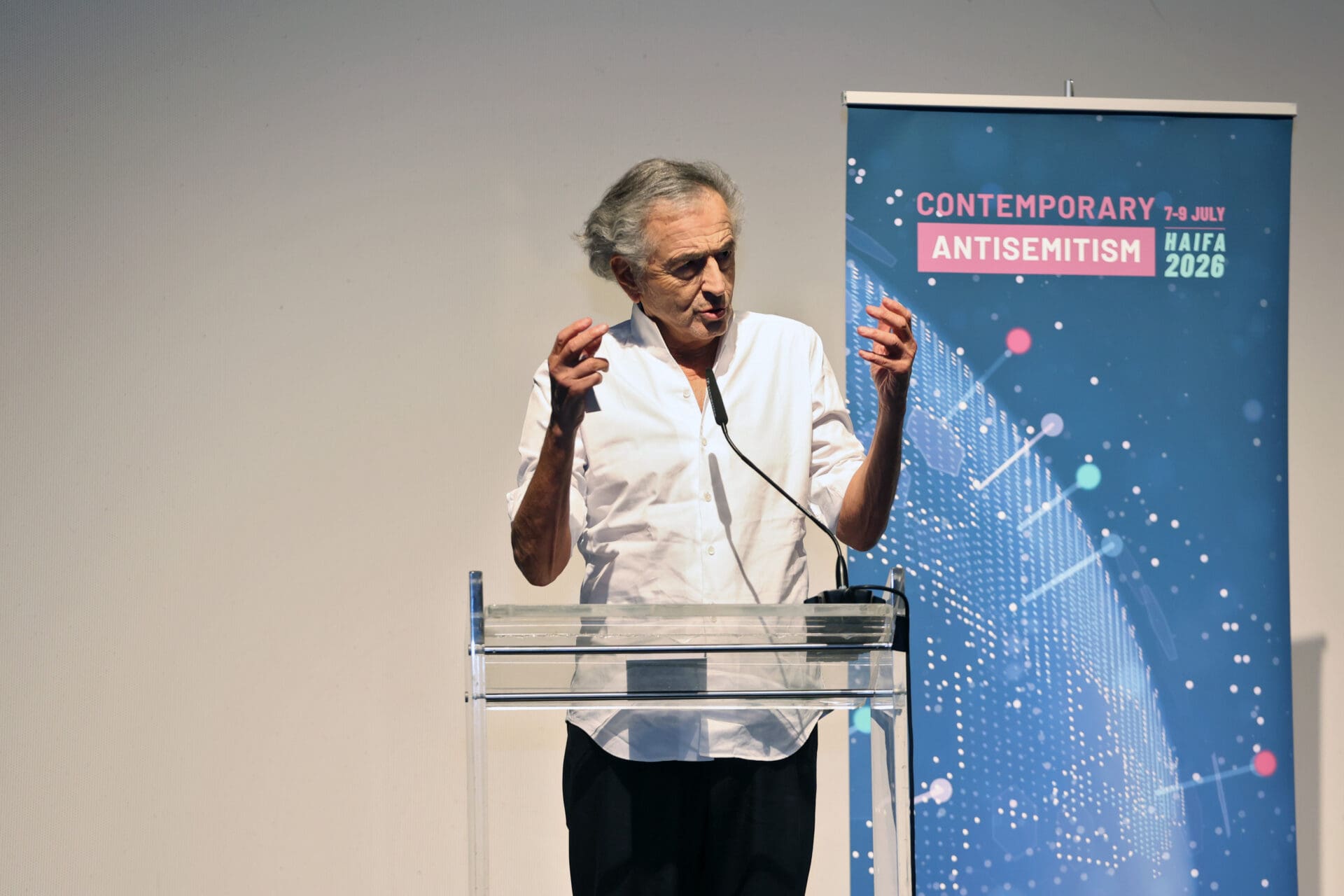
Closing event with a speech by Bernard Henri Levy
The closing event launched a translation of Bernard Henri Levy's book from France, "Israel Alone." Although the translation had already been published in March, as you may recall, the conference was postponed due to the war. Haifa Mayor Yona Yahav also honored the conference with his presence at its conclusion, a tribute to the guests and an achievement for the city of Haifa, which has not hosted an international academic event of this magnitude for a long time.
Haifa as a World Center for the Study of Antisemitism: Conference Summary
The Third International Conference on the Study of Contemporary Antisemitism, held at the University of Haifa, was much more than an academic event. It marked the formation of an international research community that seeks to address one of the most worrying phenomena of our time through knowledge, research, and collaboration across disciplines and countries.
The establishment of the CASA International Association in Haifa is a significant achievement for Israeli academia and for the city of Haifa, which has become a global focus for research into contemporary anti-Semitism. The participation of hundreds of researchers and academics, who came to Israel even after the conference was postponed due to the war, indicates a deep commitment to continuing research, precisely at a time when manifestations of anti-Semitism around the world are on the rise.
Beyond lectures and discussions, the conference conveyed a clear message: The fight against anti-Semitism cannot be satisfied with Holocaust remembrance or advocacy alone. It requires up-to-date research, data collection, analysis of new phenomena, and an understanding of the ways in which anti-Semitism is changing its face in the 21st century – in academia, on social media, in politics, culture, sports, and in the public sphere.
For Haifa, hosting the conference and establishing the new research center is a source of pride. The city hosted hundreds of researchers from around the world and proved that even in complex times, Israel can serve as a global center for academic discussion on issues of international importance.
It remains to be wished much success to the researchers who will take part in CASA's activities and to the research center at the University of Haifa. At a time when public discourse is becoming polarized and anti-Semitism is taking on new forms, courageous, relevant, and fact-based research is of particular importance.
The next conference will be held in Philadelphia in 2027, and will continue the international cooperation that was born in London, strengthened in Haifa, and is expected to continue to develop in the coming years.
Author's note:
In my experience, after 25 years of living in Germany and dealing with Jewish and Israeli issues, as a tour guide in Cologne and as the head of donor relations at KKL-JNF Germany, anti-Semitism is also fueled by our own people: Israelis and Jews from the country and around the world who engage in defamation of our people and the State of Israel cause the accumulation of hatred, and there is a name for this: auto-anti-Semitism.
Hatred of the ultra-Orthodox, talk of genocide, and inventions such as those invented about the 100th force in the rape of the enemy, all of these are fueling anti-Semitism in the world like an unstoppable snowball. The use of defamatory language gets us into trouble. Try praising and glorifying in positive language, and see how together we will change the attitude towards Israel.
When I was a child, it was customary to say: "Dirty laundry is washed at home." Today, in the age of rapid communication and social networks, each of us must come into our own minds and think before expressing a defamatory and inflammatory opinion, which quickly turns into manifestations of anti-Semitism that do not distinguish between left and right. Perhaps through positive discourse we will succeed in reducing the anti-Semitism directed towards us, even here in Israel.
I will add a prayer for the peace of the country.
"And you will give peace to the land and eternal joy to its inhabitants."
I can't upload the second part of my response.
Thanks for the review. I was not aware of this conference. I did not find any information about it in any of the Haifa groups on Facebook, which proves that the information we are being "fed" is deliberate and focused and not specifically on what is happening in our city, especially during such a sensitive period.
"A person does to himself what the devil does not intend to do to him" (Peninima, Hanna Morag) This is what my late mother said.
We as a people, despite differences of opinion, ways, and beliefs, are committed to our very nation, our existence here, our security, and most importantly, to finding ways to live here in internal and external peace while reducing self-destruction and hatred of those who are different.
Trying to write a comment
Can't do it. Trying with a few single words.
It's worth watching the videos.
If it's long, you can speed it up!