


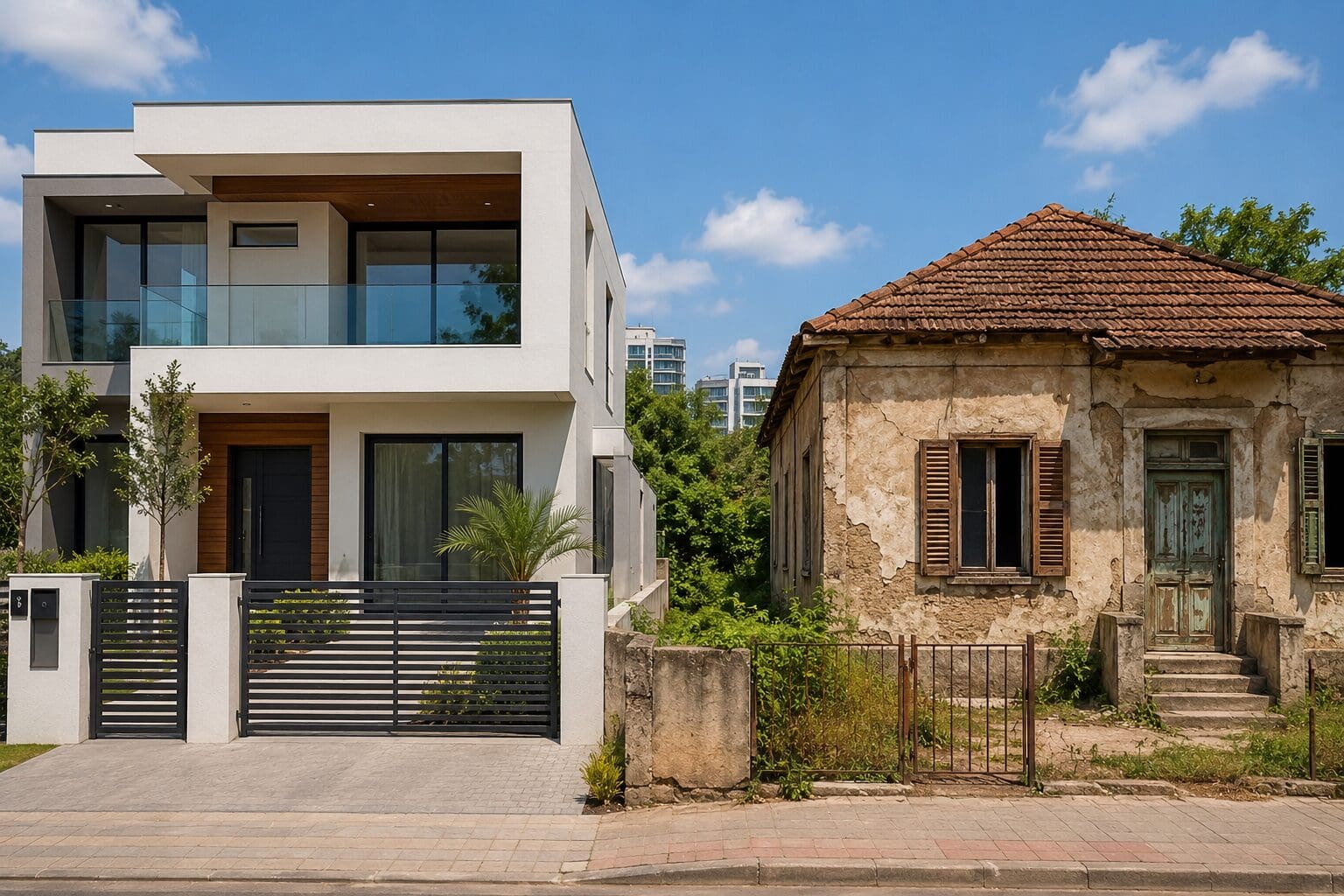
At first glance, the market seems clear: a new apartment from a contractor is the more expensive choice, and an old apartment is cheaper. But in practice, the opposite and surprising phenomenon occurs: sometimes a new apartment can cost less than a well-renovated old apartment, while at the same time becoming more expensive over the years.
The first reason is the old apartments that have been upgraded. An old apartment that has been renovated to a high standard is no longer “old” in the eyes of the market. A new kitchen, upgraded bathrooms, quality flooring, electrical and air conditioning systems, and sometimes even custom design and carpentry, all of these can amount to an investment of 300 to 600 thousand shekels or even more. Therefore, the seller is not pricing just the walls, but the entire investment that made the apartment ready for occupancy, and the price increases accordingly.
At the same time, new apartments from the contractor are sometimes offered at promotional prices, marketing discounts, or convenient financing models such as 80/20. That is: 20% payment at the beginning and 80% upon receiving the key at the end. This creates a situation in which a new apartment can be cheaper than a renovated old apartment, at least in the initial purchase phase.
But here's where the full picture comes in: ongoing costs. A new apartment almost always comes with higher fixed expenses:
- To a higher house
- External management company
- Maintenance of elevators and underground parking lots
- Security systems, electric gates, gardening and cleaning
- Building Repair Fund
In older apartments, on the other hand, the house committee is usually lower and sometimes there is no management company at all. Therefore, over time, the monthly expense can be significantly lower.
Here comes another paradox: an “expensive” apartment can actually be cheaper over time. A new apartment is more expensive to buy, but it sometimes has the advantage of modern construction, fewer malfunctions, fewer renovations, and new infrastructure that lasts for years. On the other hand, a cheaper apartment may entail plumbing, electrical, moisture, and repeated renovations over the years that add up to tens and hundreds of thousands of shekels.
That is, there is confusion between two completely different types of costs:
One-time purchase cost versus long-term living cost.
This also leads to a common mistake made by apartment buyers: focusing solely on the purchase price. In practice, the real difference between apartments is not just how much you paid on the day you signed the contract, but how much you will pay each month, and over many years of living there.
The main recommendations before buying an apartment
To truly understand what is better, it is important to not only look at the present moment but also Long term of 10 to 20 years:
- Don't just compare purchase price – The price of the apartment is just a starting point. It does not reflect the true cost over time.
- Calculate for a long term of 10-20 years:
- The real calculation should include:
- Mortgage and interest over the years
- House committee and management company are combined
- Maintenance and repairs
- Future renovations
- Changes in value and comfort over time
3. Check fixed monthly costs
- house committee
- Management company
- Building maintenance
- Insurance and repair fund
In a new apartment, these can be significant expenses that accumulate to large amounts over the years.
4. Consider future costs and renovations
In an old apartment there is a higher chance of:
- Kitchen and bathroom renovation
- Plumbing and electrical repairs
- Moisture and structural problems
These are costs that accumulate over time.
5. Also calculate “cost of living”
- Additional vehicle or transportation
- Time on the road
- Everyday comfort
- Environmental quality of life
Sometimes this is the largest expense item, even if you don't see it immediately.
The bottom line
There really is no such thing as an absolutely “cheap” or “expensive” apartment.
There are apartments that are cheap to buy and apartments that are cheap over time.
And the biggest mistake is to think that the price of the apartment tells the whole story, without considering what happens over the course of 10 to 20 years of living in it..
But how can you estimate the frequency of renovations that may occur over the years in an old apartment? Are there any statistics on this?
Then estimate an average renovation price...
In short, it is difficult to calculate…