


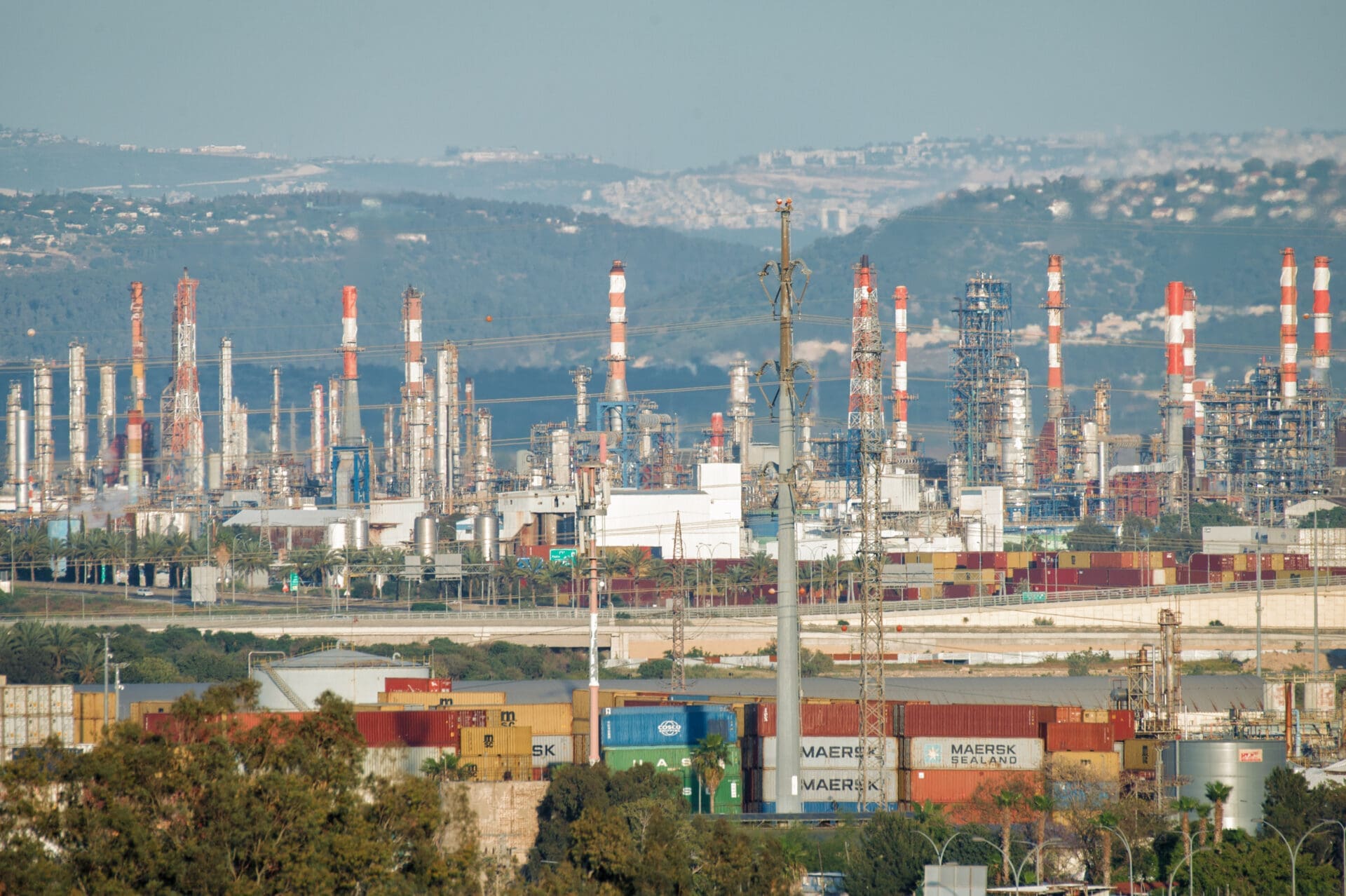
(haipo) – Israel is rapidly approaching 2030, the year when the Haifa refineries are scheduled to close, but the country is far from prepared for a revolution in the LPG (liquefied petroleum gas) economy. The State Comptroller's report presents a worrying picture of inadequate planning, infrastructure that was not developed in a timely manner, high market concentration, and extreme price differences for consumers. Haifa, which is at the heart of the LPG closure process, is particularly conspicuous by its shortcomings.
Haifa: The epicenter of the future crisis in the LPG economy
The government's decision to close the LPG plant by 2030 is supposed to reduce pollution and change the face of Haifa Bay. But according to the report, preparations for establishing LPG import and storage infrastructure in the north, critical for replacing local production, are stuck in their initial stages.
The salient data:
- 80% of LPG consumption in Israel will be based on imports after the closure of the ZAN, but there is no infrastructure ready for this.
- The alternative to the Bibor maritime link, which is supposed to allow LPG unloading in the north, was significantly delayed: "Only after the audit was completed in April 2026 was a government decision made regarding the promotion of statutory plans for the Yavor link"
- Haifa Chemical Terminal, which could have served as a quick solution to importing LPG, is not progressing due to disagreement on safety conditions: "The National Energy Agency and the Ministry of Energy have not yet determined the safety conditions... and therefore it is impossible to fully examine this alternative."
- The planned storage site in Bibor – The tender has not yet been published, and the project may exceed the 2030 target.
In practice, Haifa, which is supposed to be a central part of the solution, could become a bottleneck that will endanger Israel's energy supply.
The country is not prepared for the closure of the ZAN: poor planning and fear of an import monopoly
The report indicates that the Ministry of Energy, the Ministry of Finance, and the National Economic Council have not completed preparations for the transition to an import-based economy:
- Today, only 37% of LPG is imported., but after the closing of the ZAAN will be required 500 thousand tons of LPG are imported per year.
- There is only one sea link. (opposite Ashkelon) and only One trader Which imports LPG to Israel.
- Without new infrastructure, Israel could become dependent on a single import monopoly.
Import infrastructure in the North: Years of talk – very little execution
1. Bibor Sea Link – Stuck in Planning
Despite clear schedules, the engineering design was not completed on time, and work has not yet begun.
2. Haifa Chemical Terminal – An unprecedented quick solution
The lack of a decision on safety conditions prevents progress.
3. LPG storage in the north – a tender that does not get underway
The Ministry of Finance has not yet issued a tender, despite its importance for creating an emergency stockpile.
High concentration and extreme price differences
The report indicates a concentrated market in which the four largest suppliers control 63%–77% of the domestic market. Price differences between neighboring cities in the Dan bloc reach 111% in container centers, "the gap between the lowest average price… and the highest average price… 111%"
Even within the same city, for example Jerusalem, gaps of up to 155% were found in the prices of 12 kg containers.
Consequences for consumers: limited supplier switching, partial information
Despite an increase in customer switching to smaller suppliers, competition between the larger suppliers is almost non-existent. In addition, the Ministry of Energy website does not allow for true price comparisons between neighborhoods and localities.
Weak enforcement and gas smuggling
- On average 37 investigation cases per year for unlicensed activity.
- 20 gas smuggling cases from Judea and Samaria per year, without any real ability to gauge the extent of the phenomenon.
Haifa is paying the price – and the state must wake up
The State Comptroller's report presents a clear picture: Israel is not prepared to close the gas pipeline and transition to an import-based LPG economy. Haifa, which is at the heart of the process, could become the epicenter of an energy crisis if infrastructure in the north is not accelerated.
The Comptroller calls on the government to act urgently:
- Promote import and storage infrastructure in the North and South
- Strengthen market supervision
- Dealing with concentration and price disparities
- and ensure a stable energy supply even in times of emergency
Time until 2030 is running out and the clock for Haifa Bay is ticking.
Is a chemical terminal and storage discharge different in terms of the nature of the danger from the same amount of gas in refineries?
No. Don't play with the residents of Haifa – a chemical terminal and huge storage sites, as well as tankers from abroad that will bring it, are no less dangerous, and some would say even much more so.
Again, the solution is the infrastructure and pollution bay in Haifa. Will we see them building a chemical terminal in Jaffa? In Hadera?
Why only Haifa Bay??