


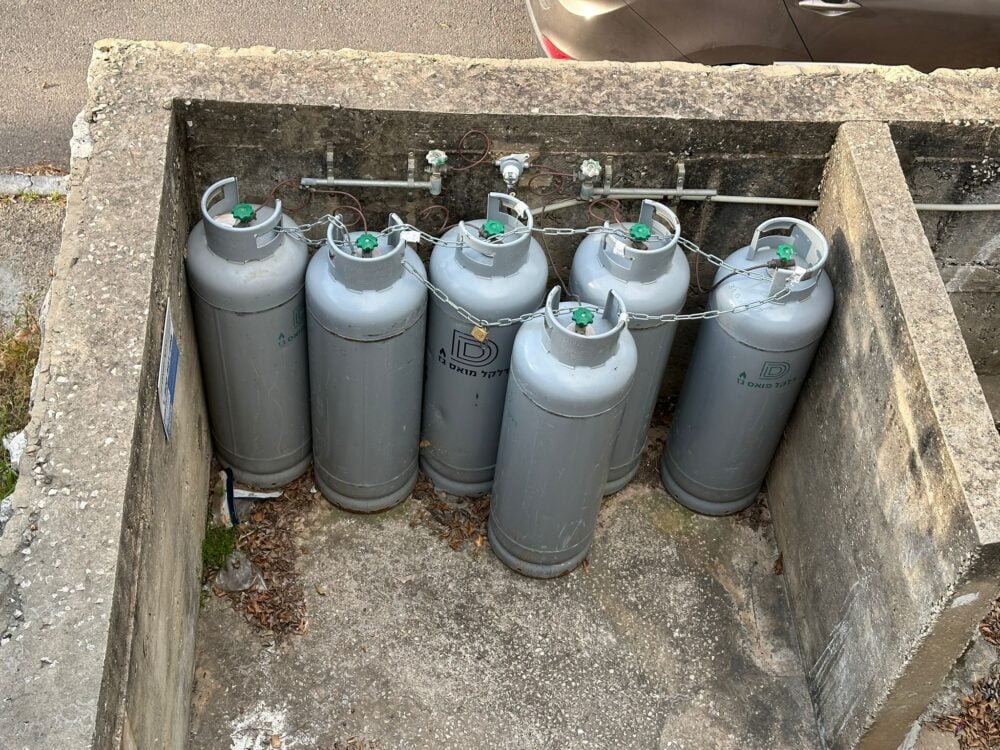
(haipo) News for the public: The Ministry of Energy and Infrastructure is launching a broad-based program designed to increase competition in the domestic gas (LPG) market, improve transparency, and, most importantly, lead to lower prices for households in Israel. The move includes a series of regulatory steps, new digital tools, and ongoing data publication, with the aim of enabling consumers to easily compare prices and switch between suppliers without barriers.
Gaps of hundreds of shekels a year
Tests conducted by the ministry reveal a worrying picture: significant gaps between gas supplier prices, which can reach hundreds of shekels per year for each household.
For example, in the 12 largest cities in Israel, the gap between the cheapest and most expensive bimonthly bills exceeds 100%. The lowest average price is about 63 NIS, while the highest reaches about 130 NIS. In Jerusalem, the gaps are particularly noticeable: consumers pay between 74 NIS and 164 NIS for the same gas consumption, a gap of 91 NIS per bill, which can accumulate to about 550 NIS per year.
Simpler and faster supplier switching
One of the main barriers in the gas market has been the difficulty in switching suppliers, which has discouraged many consumers from exploring cheaper alternatives. As part of the new plan, the Ministry of Energy is working to remove the barriers through a series of steps: requiring an outgoing supplier to sell essential equipment such as meters and regulators to the incoming supplier at a regulated price, setting a stable price for a period of at least one year, requiring 60 days' advance notice of any price change, and making information, guides, and digital tools available to the public.
These steps are intended to make the process of switching between suppliers simpler, faster and more transparent, without fear of harming the continuity of gas supply.
Competition from the start
The move also includes a significant change in the selection of gas suppliers in new buildings. Contractors will be required to conduct a competitive process between several suppliers at the initial contracting stage, to ensure lower prices for tenants before they even move into the apartment.
New price comparison calculator
As part of increasing transparency, the gas price comparison calculator on the Ministry of Energy website has been upgraded. The tool allows every citizen to enter basic details and receive within seconds an up-to-date price comparison in their area of residence, depending on the type of infrastructure. The calculator is also adapted for use on mobile devices, and additional functions are expected to be added in the future, such as calculating savings potential and guidance for switching suppliers.
Who is the cheapest in your city?
For the first time, the ministry will publish a monthly price survey that will show the price differences between gas suppliers in each city. Each month, a different city out of the 12 largest will be examined, and the data will be made available to the public in a clear and accessible manner.
The ministry emphasizes that publishing the data will not only provide information, but will also exert competitive pressure on the companies and encourage price reductions.
“A free market with social sensitivity”

Minister of Energy and Infrastructure, Eli Cohen"The plan will remove barriers, increase transparency, and make switching between providers simple and fast. We will continue to work to promote competition and lower prices for all Israeli citizens."
The firm's CEO, Yossi Dayan, He emphasized that this is a move designed to change the rules of the game in the industry: "We have identified significant gaps that indicate real potential for reducing prices without harming service."
Batsheva Abuhatsira, Director of the Fuel and Gas Administration, It notes that the administration is leading a broad move to increase competition in the LPG market and reduce the cost of living. Within this framework, steps are being promoted to improve price transparency, upgrade the comparison website, and remove regulatory barriers to switching between suppliers, moves that allow consumers to make informed decisions and save significant amounts each year.
The Energy Ministry is calling on the public to take an active part. Check invoices, compare prices, bargain and, if necessary, go through a supplier.
The message is clear. Competition starts with consumers and the savings can reach hundreds of shekels a year.
I don't understand, Israel is a gas powerhouse and is known to the whole world, so why is the price going up and up endlessly instead of going down?
Confusion.
They should lower gas prices for importers, and then consumer prices will also drop.
A month ago, prices jumped by 15% across all gas companies.
How can it be that a country with reservoirs of trillions of cubic meters sells to an importer at the prices of a third world country?
Corrupt people have had enough
I have large containers.
I would pay 420 NIS for a large gas tank and the price instantly jumped to 560 NIS.
A small container cost 120 shekels and went up to 190.
What happened to Pazgaz?
The same should be done with elevator maintenance companies. Today, it is impossible to replace a company that maintains the elevator in a building. The tenants are captives of the company that has an interest in it, and instead of repairing it, it says there are no parts and that the elevator needs to be replaced.